



Lemongrass Essential Oil
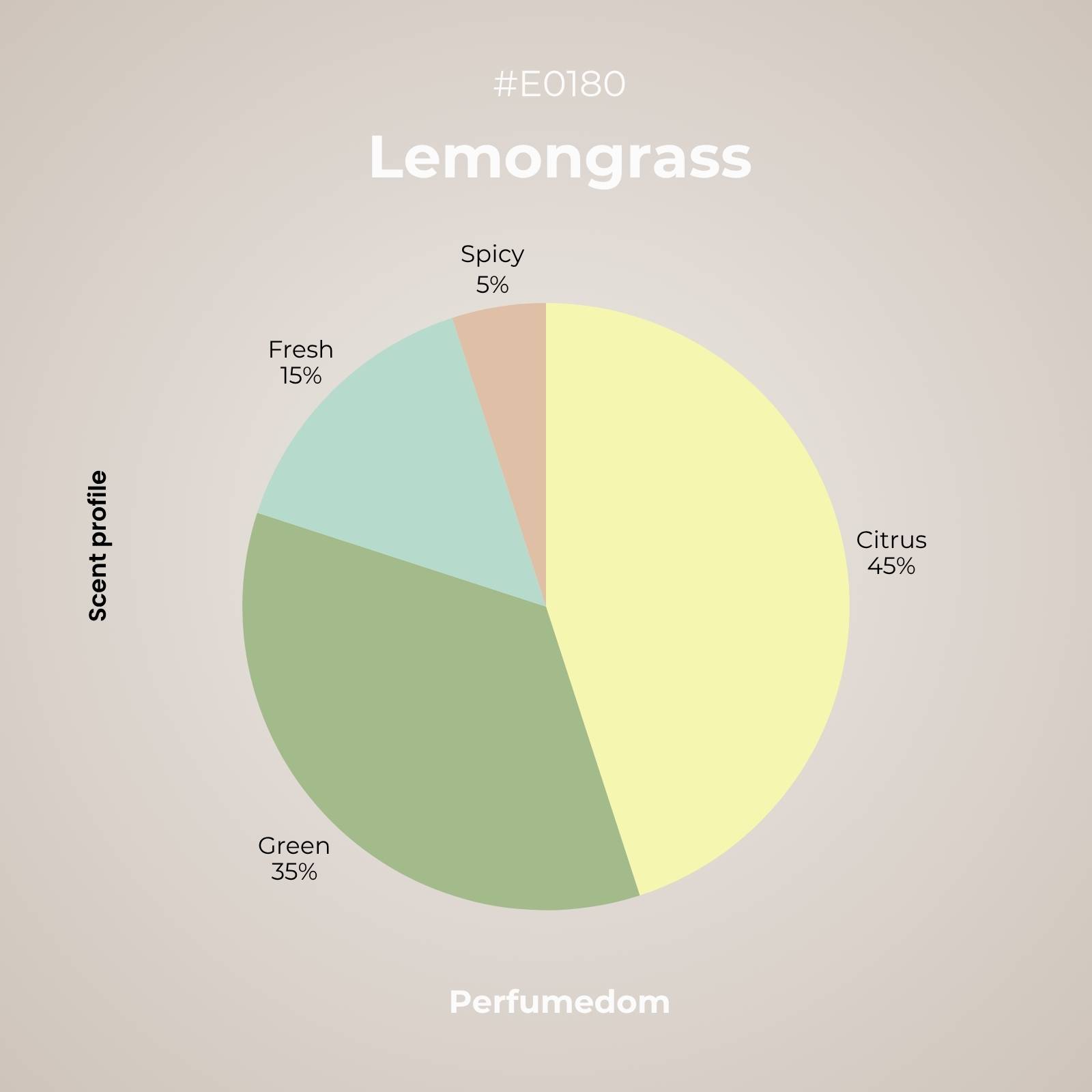
Lemongrass Essential Oil is a bright, citrusy, and earthy aroma with a hint of sweetness. Perfect for crafters, it’s ideal for adding a refreshing, invigorating touch to candles, soaps, diffusers, and cleaning products. Known for its purifying and uplifting properties, this oil is a versatile addition to any project. Blends beautifully with lavender, eucalyptus, and citrus oils for a clean, herbal-citrus scent that energizes and refreshes.
Ambiance: Bright / Grassy / Fresh / Energizing
Please note
This is a pure, undiluted essential oil designed for crafting end products such as candles, diffusers, soaps, bath products, and other personal care items. Essential oils are highly concentrated and should not be applied directly to the skin without proper dilution in a carrier oil. All our essential oils are measured in grams, not milliliters. Bottle fill levels may vary due to differences in oil density, which affects volume.
For specific usage limits, please refer to the Lemongrass Essential Oil IFRA guidelines or consult the Safety Data Sheet (SDS) included in the “Related Documents” tab. Compliance of the final product remains the responsibility of the manufacturer.
Packaging note: 10g testers are supplied in PET bottles for affordable evaluation and are not intended for long-term archival storage. Production sizes from 50g upwards are supplied in premium aluminium bottles for improved long-term protection. Read more
Olfactive Profile
- Note classification: Top to middle note
- Scent family: Citrus / Green / Herbal / Grassy
Lemongrass Essential Oil has a bright, sharp, and lemony-green profile with grassy, herbal, slightly earthy, and fresh citrus facets. It feels more grassy and powerful than lemon peel oil, sharper than litsea cubeba, and more natural-herbal than a simple citrus accord. Its character is vivid, energetic, and highly recognisable, making it especially useful in citrus, herbal, spa, cleaning, outdoor, and fresh botanical compositions.
The opening is crisp, lemony, and very diffusive, while the drydown becomes greener, drier, and more herbal. Compared to softer citrus oils, lemongrass brings more body, more green texture, and a stronger functional freshness, making it valuable when a formula needs a bold natural lemon effect with a clean grassy edge.
Technical Data & IFRA limits
- Product type: 100% pure essential oil
- Botanical name: Cymbopogon Flexuosus
- CAS number: 91844-92-7
- EC number: 295-161-9
- Plant part: Leaves
- Extraction method: Steam Distillation
- Origin: India
- Flashpoint: 71°C
- Density: 0.862–0.902 g/cm³ at 20°C
- Main natural constituents: Typically rich in citral, with related lemony, grassy, and citrus-herbal aromatic constituents. Exact composition may vary by batch and should be confirmed through the product’s corrected Allergen Declaration or chromatographic data.
IFRA Maximum Usage Levels
- Candles: 100%
- Diffusers: 1.50%
- Perfumes: 0.75%
- Soaps: 1.50%
For full category-specific limits, refer to the Lemongrass Essential Oil IFRA certificate available in the “Related Documents” tab.
Formulation & Creative Uses
Lemongrass Essential Oil works as a strong citrus-herbal top-to-middle note. It adds sharp lemony freshness, green texture, diffusion, and a clean botanical lift to a formula, helping heavy, sweet, woody, resinous, musky, or dull compositions feel brighter and more energetic. It is especially useful when a blend needs a strong natural lemon impression with more herbal body than lemon peel oil.
Common applications
- Diffusers: Useful for bright, fresh, green, energizing, spa-like, cleaning-inspired, and herbal blends, always within IFRA limits.
- Candles & wax melts: Adds strong lemony-grassy brightness, especially in clean home, summer, herbal, kitchen-fresh, outdoor, and spa-inspired compositions.
- Soaps: Brings a vivid lemon-green character, with testing required for scent retention and process stability.
- Bath & body products: Suitable when used within IFRA limits and proper dilution guidelines.
- Perfumery: Useful in citrus-herbal accords, green colognes, tea-inspired blends, fresh florals, clean musks, outdoor compositions, and bright aromatic structures.
Creative directions
Use Lemongrass Essential Oil when a formula needs a sharp lemony lift, a clean grassy freshness, or a more energetic citrus-herbal structure. It works especially well in blends that feel too heavy, sweet, soft, resinous, woody, or flat, helping the composition become brighter, cleaner, and more immediately refreshing.
For fresh diffuser and home fragrance blends, combine lemongrass with rosemary, eucalyptus, peppermint, lavender, basil, or tea tree to create a crisp botanical freshness. For citrus directions, use it with lemon, lime, bergamot, grapefruit, or orange to intensify brightness and add a greener, more natural edge. For spa and clean woody compositions, pair it with cedarwood, amyris, frankincense, patchouli, or soft musks to balance its sharp citrus opening with a smoother base.
Lemongrass is also useful in herbal tea, kitchen-fresh, green citrus, outdoor, cleaning-inspired, and summer botanical compositions. Because it is powerful, citral-rich, and highly diffusive, it can become sharp, soapy, or overly lemony if overdosed. It performs best when balanced with softer citrus oils, herbs, woods, florals, musks, or gentle balsamic materials that round out its bold lemon-grassy character.
Storage & Natural Variations
Lemongrass Essential Oil is classified as irritating to the skin, causing serious eye damage, sensitising, hazardous if swallowed and enters the airways, and toxic to aquatic life with long lasting effects. Always follow the IFRA guidance and SDS for the intended product category. The final safety assessment, dilution level, labeling, and regulatory compliance remain the responsibility of the manufacturer.
Essential oils are natural aromatic materials, and slight variations in scent, colour, density, and appearance may occur from batch to batch. These differences are normal and can be influenced by harvest conditions, climate, origin, plant material, and natural compositional variation.
Scent perception may also vary depending on individual sensitivity, dilution level, formulation base, and application method. Essential oils may not smell exactly the same in the bottle as they do in a finished product. We strongly recommend testing a 10g bottle before committing to larger quantities, especially for commercial production.
To preserve quality, store tightly sealed in the original container, away from heat, light, air, and moisture. Citral-rich essential oils can be sensitive to oxidation and should be stored carefully to preserve their fresh aromatic character. Store in a cool, dry, well-ventilated place and avoid release into drains, surface water, or the environment.
Order processing times
Standard lead time is 1-2 business days. Processing times may be longer during peak holiday seasons—please plan accordingly.
Bulk Orders
For larger quantities, we offer bulk production starting from 5kg per fragrance code, with a 10% discount per kilogram. Customers who need more than 5kgs per scent, can contact us to arrange a proforma invoice. Bulk orders are produced in multipliers of 5 (5kg, 10kg, 15kg, etc.) and lead times vary depending on fragrance and time of the year, usually within the range of 3 to 8 weeks.
Product Suitability Guide
Comparison of typical formulation levels with the maximum permitted use for each application based on IFRA 51st amdt.
| Application | Typical Use | Suitability |
|---|---|---|
 Candles & Wax Melts |
7–12% | Suitable |
 Electric Diffusers |
Up to 100%* | Suitable* |
 Pillow Mists |
1–5% | Below Range |
 Room Sprays |
2–5% | Suitable |
 Reed Diffusers |
15–25% | Below Range |
 Soaps & Rinse-off |
1–3% | Limited |
 Hair Fragrance |
1–3% | Below Range |
 Lotions & Body Oils |
0.5–2% | Below Range |
 Fine Fragrance |
10–15% | Below Range |
 Facial Makeup |
0.1–1% | Limited |
 Body Mist & Deodorant |
1–5% | Below Range |
How to Read the Suitability Statements
✓ Suitable: the permitted concentration reaches or exceeds the average typical-use range. △ Limited: the permitted concentration falls within the typical-use range but remains below its midpoint. × Below Range: the permitted concentration falls below the typical-use range. × Not Permitted: the applicable limit is 0%.
Please Note
Typical-use ranges are general formulation benchmarks, not product-specific recommendations. Suitability is determined by comparing the stated typical-use range with the maximum permitted concentration shown in the current supplier IFRA document.
This guide does not confirm scent performance, base compatibility, stability, device compatibility or complete finished-product compliance. Appropriate testing and all applicable safety, labelling and regulatory requirements remain the responsibility of the finished-product manufacturer.
*Electric diffusers: Up to 100% fragrance may be used only in equipment designed for undiluted fragrance oil. Dilution, carrier and compatibility requirements vary by device. Always follow the equipment manufacturer’s instructions.
Explore Similar Scents


Why Choose Perfumedom
⚡ Swift Response Times
With a 97% stock uptime and our efficient order fulfillment system, your fragrance oils are delivered promptly, ensuring you meet your production timelines.
⭐ Consistent Performance
Our fragrance oils are sourced from established European manufacturers and designed for professional use, offering consistency and performance in every batch.
🛡️ Commitment to Safety
Every fragrance in our assortment is supported by up-to-date SDS, IFRA, and CLP guidance, and manufactured strictly only with REACH regulated substances.
Sander Sepp (verified owner) –
Uplifting citrus note, great for relaxation. Good value!
Marko Barbaric (verified owner) –
Very nice smell. I had a bit troubles when mixing with alcohol, but overall very good.