

Ethyl Butyrate Aroma Molecule
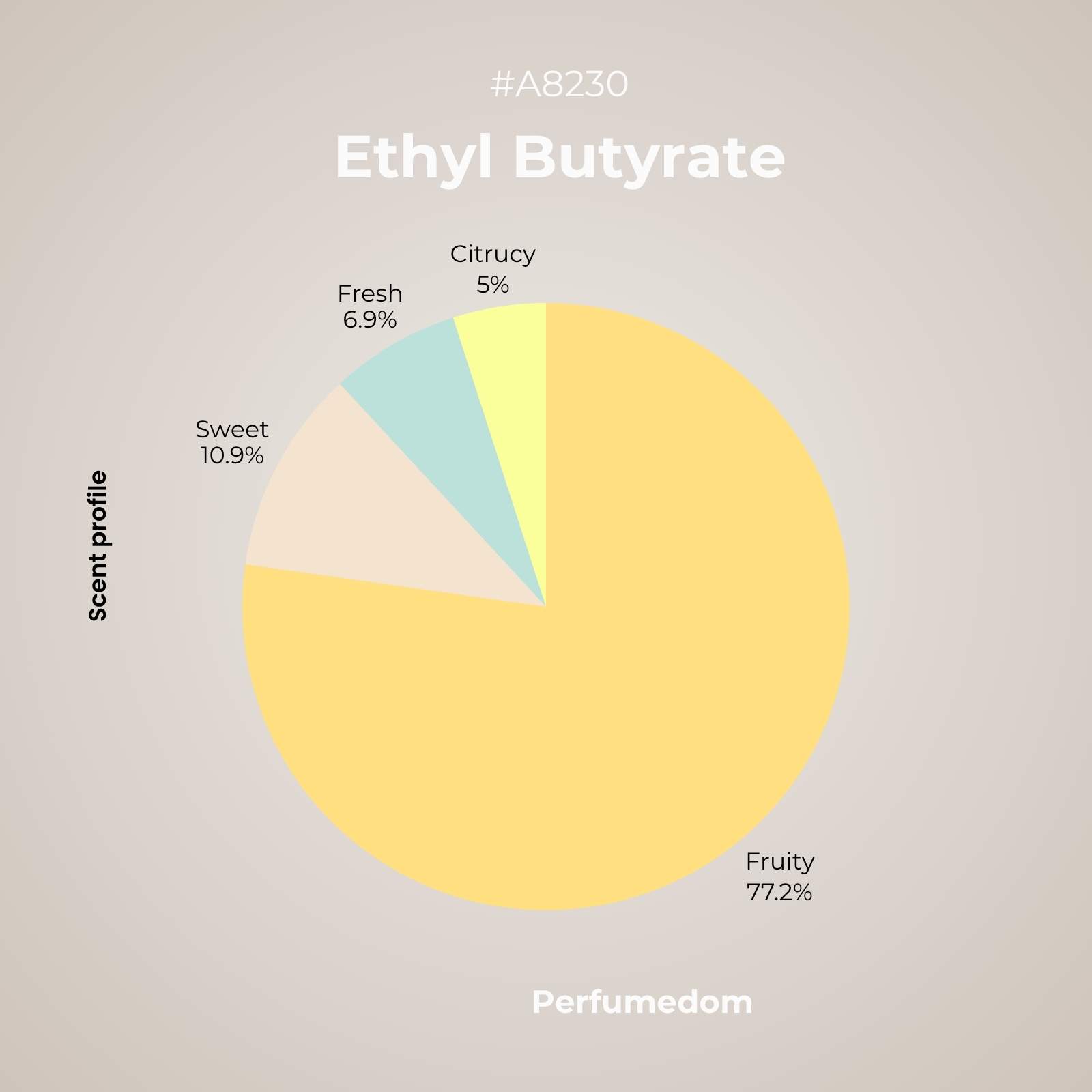
Ethyl Butyrate is one of the most recognisable fruity esters in perfumery and flavour work. Its scent is bright, volatile, and instantly tropical, with a strong association to pineapple, banana, pear, and fruit-cocktail freshness. It is especially useful when a fruit accord needs lift, sparkle, and a more immediate opening impact. Because it is very volatile and powerful, it should be used carefully and supported by longer-lasting fruity, floral, musky, or woody materials.
- Main impression: Tropical fruity burst
- Supporting facets: Pineapple, banana, pear, juicy fruit, fresh ester
- Drydown character: Light, fleeting, sweet-fruity, bright
- Used for: Tropical fruit lift, juicy top notes, pineapple effects, fruity florals, playful freshness
Please note
This is a single aroma molecule / raw perfumery material, not a finished perfume or fragrance oil. It is intended for formulation work and must not be applied directly to the skin undiluted. Aroma molecules are powerful materials that may behave differently depending on dosage, solvent system, wax, diffuser base, cosmetic base, temperature, and the full composition. Always test in your intended application before production.
Full safety, allergen, IFRA, and technical information is provided in the SDS, IFRA Certificate, and Allergen Declaration available in the “Related Documents” tab. Compliance and documentation of the final product remains the responsibility of the manufacturer.
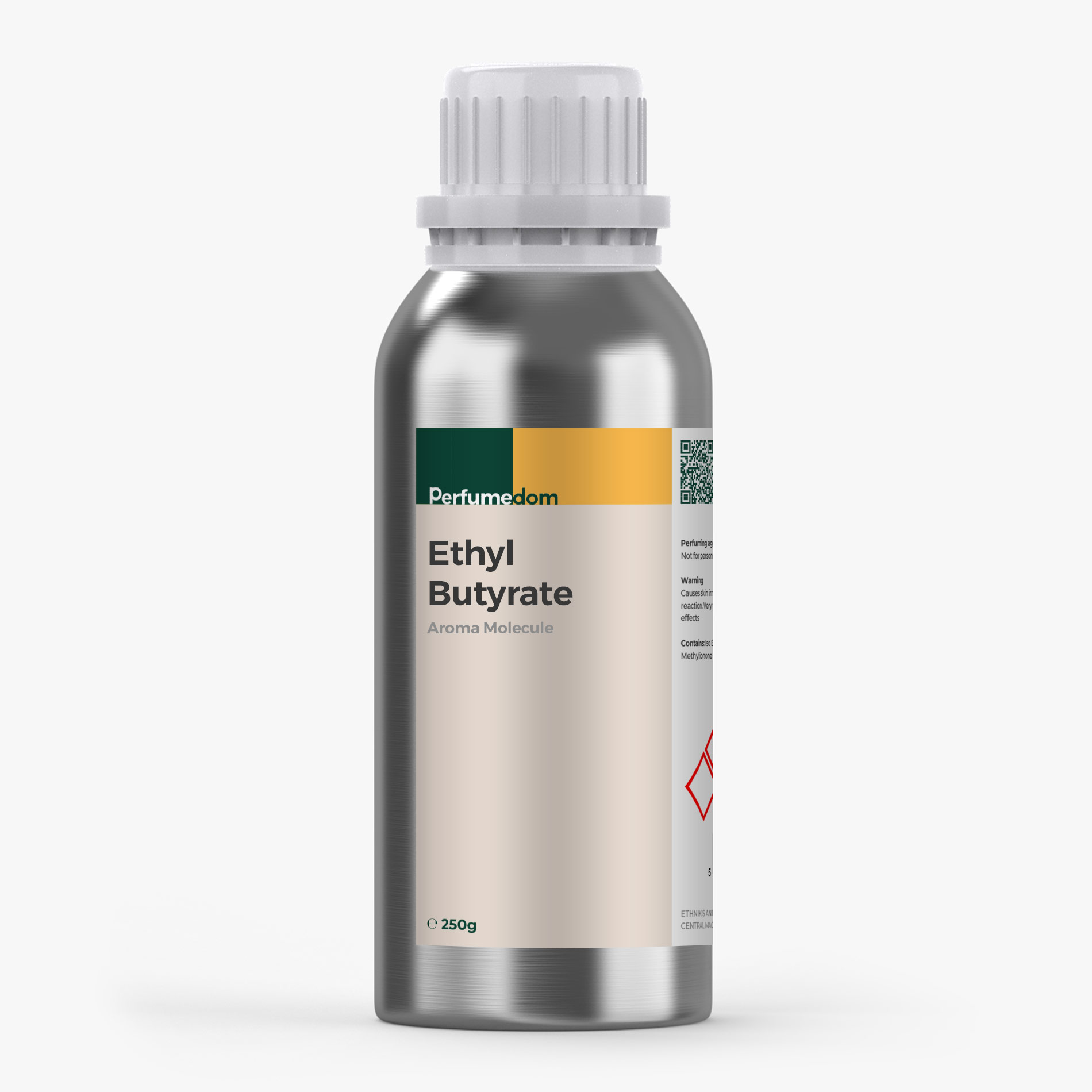
Packaging note: 10g sizes are supplied in PET bottles for affordable small-quantity access. Production sizes from 50g upwards are supplied in premium aluminium bottles for improved long-term protection. Read more
Olfactive Profile
- Primary character: Bright tropical fruit with strong pineapple and banana facets.
- Secondary nuances: Juicy pear, fruit cocktail, sweet ester, fresh exotic fruit, and light candy-like fruitiness.
- Texture: Sparkling, volatile, juicy, and lively rather than creamy, heavy, or long-lasting.
- Diffusion: Strong and immediate in the opening.
- Tenacity: Short to moderate; best used as a top-note impact material.
- Comparison anchor: Brighter and more volatile than C16 Aldehyde, less creamy than Gamma Decalactone, and more tropical than most citrus esters.
Ethyl Butyrate Aroma Molecule smells like a sudden burst of pineapple, banana, and juicy pear. It does not create a complete fruit accord by itself, and it does not last like a lactone or musk. Its beauty is in the opening: it makes a formula feel instantly fruity, colourful, and alive. Used in small amounts, it can lift fruit compositions beautifully; overdosed, it can become too candy-like, sharp, or artificial.
Formulation & Creative Uses
What It Adds to Your Formula
- Tropical lift: Adds pineapple, banana, and exotic fruit brightness.
- Juiciness: Makes fruit accords feel more mouth-watering and energetic.
- Top-note impact: Gives immediate fruity recognition from the first impression.
- Freshness: Adds a lively volatile sparkle to sweet or creamy fruit blends.
- Fruit realism: Supports pineapple, pear, apple, mango, banana, and tropical blends.
- Playfulness: Makes formulas feel brighter, younger, and more colourful.
What It Does Not Do
- It does not last strongly by itself: It is highly volatile and needs support from longer-lasting fruity, musky, woody, or lactonic materials.
- It does not create a full tropical accord alone: It needs citrus, lactones, musks, florals, or green notes for structure.
- It does not add creaminess: Use lactones or vanilla materials if a creamy fruit effect is needed.
- It is not a heavy base material: Its main role is top-note lift and fruity sparkle.
Creative Uses
Ethyl Butyrate is excellent for tropical fruit accords, pineapple notes, banana effects, juicy pear, fruity florals, spring aquatics, citrus cocktails, fruit candy styles, and playful gourmand compositions. It can brighten peach accords, lift berry blends, add sparkle to coconut-pineapple profiles, and bring freshness to sweet fruity bases. In home fragrance, it works well in tropical, smoothie, cocktail, fruity candy, summer, and juicy exotic fruit directions.
Creative Inspiration
Use Ethyl Butyrate Aroma Molecule with Gamma Decalactone for a juicy pineapple-peach direction with creamy fruit body. Pair it with C16 Aldehyde for a brighter strawberry-peach tropical effect. Combine it with Methyl Pamplemousse for a sharper citrus-tropical opening. Use it with Galaxolide 50 DPG or Ethylene Brassylate to give tropical fruits a cleaner, more wearable drydown.
Common Applications
- Fine fragrance: Useful in tropical fruits, fruity florals, citrus fruits, fresh aquatics, playful gourmands, and juicy modern compositions.
- Candles & wax melts: Suitable where the final formula allows; especially useful for tropical fruit, pineapple, smoothie, cocktail, candy, and summer candle profiles.
- Reed diffusers: Adds bright fruity lift, but volatility and base compatibility must be tested carefully.
- Room sprays: Very useful for immediate fruity freshness and tropical top-note impact.
- Soaps & rinse-off products: Can support fruity, tropical, citrus-fruit, and playful cosmetic profiles.
- Cosmetic fragrance bases: Suitable where permitted by IFRA and final product safety assessment.
Usage, Dose & Performance
- Suggested starting dose: 0.02–0.2% of the fragrance concentrate for early trials.
- Trace use: Adds subtle tropical brightness and fresh fruity lift.
- Moderate use: Creates a clear pineapple, banana, or fruit-cocktail top note.
- High use: Can quickly dominate the opening and become sharp, candy-like, or artificial.
- Diffusion: Strong and immediate.
- Tenacity: Short to moderate, mainly active in the top note.
- Blending behavior: Works well with fruity esters, citrus oils, lactones, musks, tropical notes, florals, green notes, and light woods.
- Overdose risk: Can make a formula smell too artificial, candy-fruity, or flavour-like if not balanced with body and structure.
Pairing Suggestions
Pairs well with aroma molecules
- Gamma Decalactone: Adds creamy peach and lactonic body beneath the fruity burst.
- C16 Aldehyde: Builds a stronger strawberry-peach tropical fruit heart.
- Methyl Pamplemousse: Adds bitter citrus freshness and grapefruit brightness.
- Hedione MDJ: Gives airy floral lift and prevents the fruit from feeling flat.
- Ethyl Maltol: Pushes the profile toward candy fruit and sweet gourmand effects.
- Galaxolide 50 DPG: Adds clean musk softness and a more finished fruity drydown.
Pairs well with essential oils
- Mandarine Essential Oil: Adds juicy citrus sweetness and playful fruit lift.
- Orange Essential Oil: Supports sunny fruity warmth and sweet citrus body.
- Lime Essential Oil: Adds sharp green citrus sparkle and cocktail freshness.
- Grapefruit Essential Oil: Gives bitter peel contrast and fresh citrus realism.
- Ginger Essential Oil: Adds spicy freshness and prevents tropical fruits from feeling flat.
- Ylang Ylang Essential Oil: Adds creamy tropical floral softness.
Pairs well with base accords
- Vanilla Accord: Builds tropical fruit dessert and smoothie-style effects.
- White Musk Accord: Adds clean softness and a more wearable fruity drydown.
- Jasmine Flower Accord: Creates a bright fruity-floral heart.
- Bergamot Accord: Adds citrus lift and fresh opening structure.
- Rice Accord: Adds milky softness for creamy fruit concepts.
- Sandal Accord: Gives smooth woody support beneath tropical fruit notes.
Technical Data & IFRA Limits
- Commercial name: Ethyl Butyrate
- Synonyms: Ethyl Butanoate
- INCI name: Ethyl Butyrate
- IUPAC name: Ethyl butanoate
- CAS number: 105-54-4
- EC number: 203-306-4
- FEMA number: 2427
- FLAVIS number: 09.039
- Chemical class: Fruity ester
- Material form: Liquid
- Flash point: 25°C according to the supplied SDS
- Solubility: Soluble in ethanol; insoluble in water
- Allergen declaration: No listed EU fragrance allergens declared.
IFRA 51st Amendment Limits
- Fine fragrance: < 100%
- Body creams, oils and lotions: < 100%
- Soap and rinse-off products: < 100%
- Reed diffusers: < 100%
- Room sprays: < 100%
- Candles: < 100%
No IFRA restriction is listed for this material under the supplied 51st Amendment certificate. IFRA percentages are maximum permitted levels, not recommended usage levels. The final product manufacturer is responsible for checking the correct IFRA category, calculating the final concentration, and confirming suitability in the intended application.
Stability & Handling
Ethyl Butyrate should be stored tightly sealed in its original container, at a maximum of 25°C, away from light, heat, air exposure, sparks, open flames, and other ignition sources. It is a highly volatile liquid with a low flash point, so it should be handled with good ventilation and kept away from smoking, heat, and static discharge risks. No pre-warming is required. For small-scale formulation trials, a low dilution in ethanol can make dosing easier and reduce overdose risk.
Its discoloration potential is considered low because the material is colourless and not known as a strong discoloring ingredient. However, fruity esters can lose freshness or shift in odour with heat, poor sealing, evaporation, or prolonged air exposure. Testing is recommended in candles, reed diffusers, sprays, pale waxes, clear bases, and any application where top-note freshness is important.
Safety & Testing
Ethyl Butyrate Aroma Molecule is a raw fragrance material for formulation use. It is not a finished perfume and must not be applied directly to the skin undiluted.
Always review the SDS, IFRA Certificate, Cosmetics Declaration, and Technical Data Sheet before use. This material is classified as a flammable liquid and eye irritant, so storage, handling, transport, dosage, and final product classification must be checked carefully before production. Test the material in the intended base, as performance may vary depending on dosage, solvent system, wax type, diffuser base, spray solvent, surfactant system, processing temperature, packaging, and evaporation loss.
Final product safety, labelling, IFRA compliance, CLP classification, allergen declaration, cosmetic assessment, transport classification, and market compliance remain the responsibility of the final product manufacturer.
Explore Similar Scents

Why Choose Perfumedom
⚡ Swift Response Times
With a 97% stock uptime and our efficient order fulfillment system, your fragrance oils are delivered promptly, ensuring you meet your production timelines.
⭐ Consistent Performance
Our fragrance oils are sourced from established European manufacturers and designed for professional use, offering consistency and performance in every batch.
🛡️ Commitment to Safety
Every fragrance in our assortment is supported by up-to-date SDS, IFRA, and CLP guidance, and manufactured strictly only with REACH regulated substances.
Reviews
There are no reviews yet