


Veramoss 10 DPG Aroma Molecule
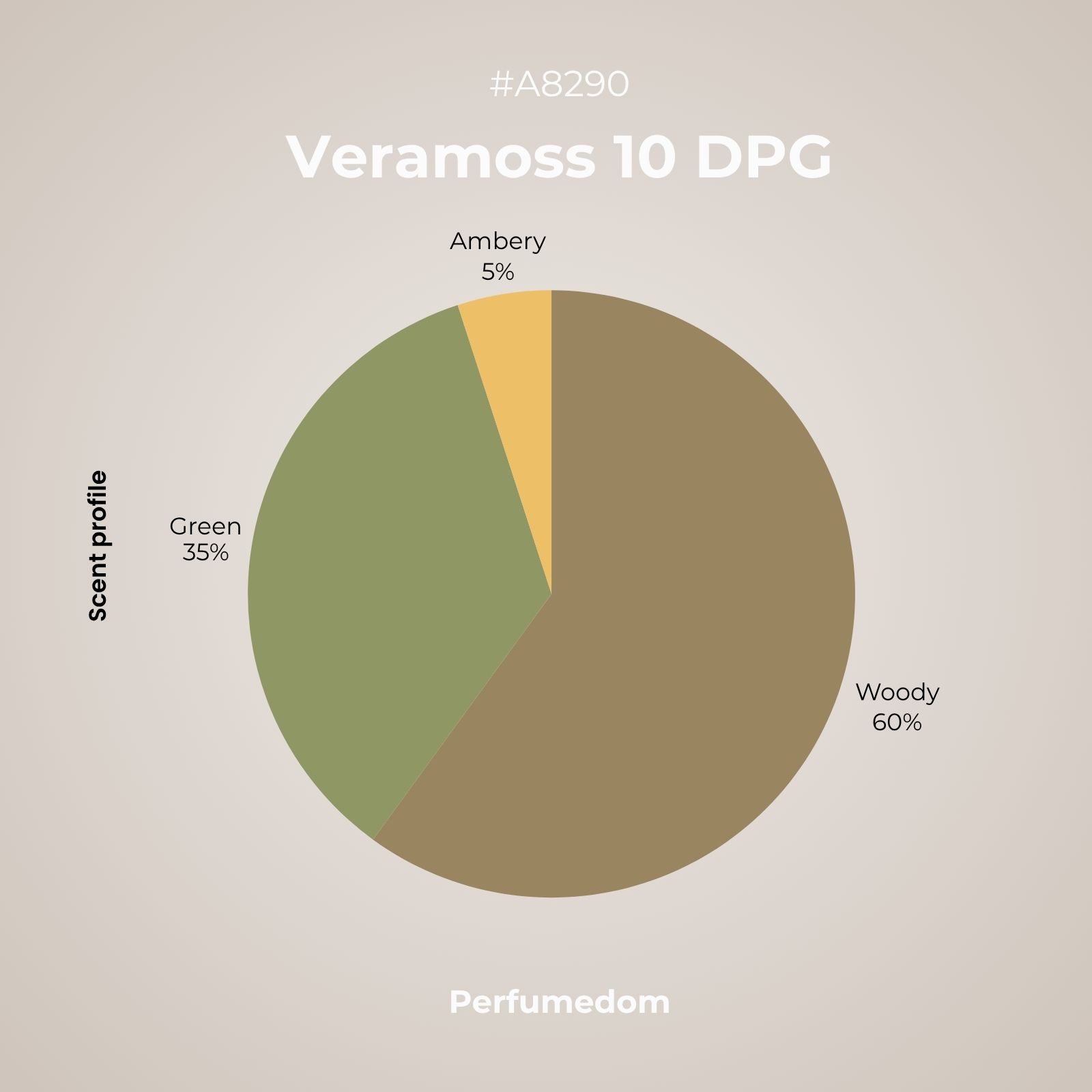
Veramoss brings the unmistakable character of oakmoss-inspired perfumery into a controlled synthetic material. Its scent is dry, earthy, slightly phenolic and woody, with a distinctive mossy depth that gives fragrance compositions a more classical, sophisticated structure. It is particularly valuable in chypres, fougères, woody ambers, leather accords and forest-inspired fragrances. Supplied at 10% in DPG, it offers a practical way to explore this powerful mossy character without handling crystalline material.
- Main impression: Dry oakmoss-like woods
- Supporting facets: Earthy moss, forest floor, dry wood, subtle phenolic warmth
- Drydown character: Persistent, dry, earthy, woody and softly mossy
- Used for: Oakmoss-style effects, chypre bases, fougère structures, forest accords, woody fixation
Please note
Veramoss 10 DPG is a pre-diluted aroma molecule containing 10% Veramoss in 90% Dipropylene Glycol, not neat Veramoss crystals. It is a raw perfumery material, not a finished perfume or fragrance oil, and must not be applied directly to the skin as supplied. Usage levels should be calculated based on the supplied dilution and the final concentration of active Methyl Atrarate.
Aroma molecules are powerful materials that may behave differently depending on dosage, solvent system, wax, diffuser base, cosmetic base, temperature, and the full composition. Always test in your intended application before production.
Full safety, allergen, IFRA, cosmetic, and technical information is provided in the SDS, IFRA Certificate, and Cosmetics/Allergens Declaration available in the “Related Documents” tab. Compliance of the final product remains the responsibility of the manufacturer.
Packaging note: 10g sizes are supplied in PET bottles for affordable small-quantity access. Production sizes from 50g upwards are supplied in premium aluminium bottles for improved long-term protection. Read more
Olfactive Profile
- Primary character: Dry earthy moss with a distinctive oakmoss-like woody impression.
- Secondary nuances: Forest floor, slightly phenolic warmth, dry bark, soft balsamic undertones and subtle powdery earthiness.
- Texture: Dry, grounded, softly powdery and dense rather than bright, sweet or highly diffusive.
- Diffusion: Moderate; more structural than expansive, with emphasis on the heart and base.
- Tenacity: Very good, particularly in woody, mossy, leathery and classical perfume structures.
- Comparison anchor: More mossy and earthy than Cedramber, less musky than Cashmeran, and drier and more classical than Benzyl Salicylate.
Veramoss smells like a dry, shaded forest floor, with woody moss, bark and a faintly phenolic undertone. Its character is less about freshly cut greenery and more about the earthy depth beneath it. In a fragrance composition, it creates the impression of a well-established mossy foundation, bringing balance to florals, woods, citrus and aromatic materials without adding unnecessary sweetness.
Formulation & Creative Uses
What It Adds to Your Formula
- Oakmoss-like character: Creates a recognisable mossy impression without relying on natural oakmoss extract.
- Chypre structure: Gives depth and classical character to citrus-floral-woody compositions.
- Fougère support: Reinforces the earthy mossy base beneath lavender, coumarin and aromatic herbs.
- Woody depth: Adds dryness and forest-floor realism to cedar, vetiver, patchouli and amber materials.
- Fixative support: Contributes persistent base character and helps anchor mossy accords.
- Controlled handling: Offers the characteristic Methyl Atrarate effect in a manageable 10% liquid dilution.
What It Does Not Do
- It is not natural oakmoss: It recreates an important mossy facet but does not reproduce the complete complexity of oakmoss absolute.
- It is not neat Veramoss: The active material represents only 10% of the supplied solution.
- It does not add fresh green brightness: Its character is earthy and mossy rather than leafy or citrusy.
- It does not create an entire chypre accord alone: It needs supporting woods, citrus, florals, resins or aromatics for a complete composition.
Creative Uses
Veramoss is especially valuable in chypre and fougère compositions, where its oakmoss-like character provides depth, dryness and a recognisable classical signature. It can also be used in woody fragrances, leather accords, aromatic masculine compositions, patchouli blends, forest scents, incense structures and sophisticated floral bases.
In contemporary perfumery, it works well when combined with transparent woody materials, soft musks and green florals, allowing the mossy character to feel modern rather than overly traditional. For home fragrance, it is particularly relevant to forest floor, woodland, moss-covered stone, earthy vetiver, dry leather and botanical compositions.
Creative Inspiration
Combine Veramoss 10 DPG with Coumarin 10 DPG and Lavender Essential Oil for a classical fougère foundation. Pair it with Bergamot Essential Oil, Patchouli Essential Oil and Benzyl Salicylate for a chypre-inspired structure. Use it with Cedramber and Iso E Super for a modern dry woody-moss accord, or combine it with Cashmeran and White Musk Accord for a softer contemporary mossy base.
Common Applications
- Fine fragrance: Particularly useful in chypres, fougères, woody aromatics, leather accords, mossy florals and classical masculine compositions.
- Candles & wax melts: Suitable where the final formula allows; especially relevant for forest, woodland, earthy, leather, mossy and sophisticated woody profiles.
- Reed diffusers: Adds mossy woody depth, subject to compatibility and evaporation testing in the chosen diffuser base.
- Room sprays: Useful for forest, botanical, woody, chypre-inspired and earthy home fragrance compositions.
- Soaps & rinse-off products: Can support classical fougère, woody aromatic, mossy and masculine fragrance directions.
- Cosmetic fragrance bases: Suitable where permitted by IFRA and final product safety assessment.
Usage, Dose & Performance
- Suggested starting dose: 1–10% of the supplied Veramoss 10 DPG solution in the fragrance concentrate for initial trials.
- Trace use: Adds subtle mossy dryness and earthy depth.
- Moderate use: Creates a recognisable oakmoss-like foundation for chypre, fougère and woody compositions.
- High use: Can become strongly mossy, dry, earthy or phenolic, potentially making the formula feel overly traditional or heavy.
- Active material calculation: Because this product contains 10% Methyl Atrarate in DPG, using 5% Veramoss 10% DPG in a fragrance concentrate contributes approximately 0.5% active Methyl Atrarate and 4.5% DPG.
- Diffusion: Moderate; mainly provides heart and base structure.
- Tenacity: Very good, particularly in woody, earthy and mossy fragrance compositions.
- Blending behavior: Works well with citrus, patchouli, vetiver, lavender, coumarin, woody ambers, leather materials, florals and musks.
- Overdose risk: Too much can make a composition feel dry, flat, overly mossy or phenolic, reducing freshness and floral transparency.
Pairing Suggestions
Pairs well with aroma molecules
- Coumarin 10 DPG: Creates classical fougère depth with warm hay, tonka and mossy undertones.
- Iso E Super: Adds transparent woody volume and modernises the mossy character.
- Cedramber: Reinforces dry cedarwood depth and earthy woody structure.
- Cashmeran: Adds soft musky warmth and reduces excessive dryness.
- Methyl Ionone Gamma: Creates an elegant powdery violet-wood effect with classical floral depth.
- Benzyl Salicylate: Adds floral-balsamic softness and helps round the mossy base.
Pairs well with essential oils
- Patchouli Essential Oil: Strengthens earthy, woody and chypre-style depth.
- Vetiver Essential Oil: Adds rooty dryness and a sophisticated forest-floor character.
- Lavender Essential Oil: Builds classical aromatic fougère structures.
- Bergamot Essential Oil: Creates the bright citrus contrast associated with traditional chypres.
- Cypress Essential Oil: Reinforces the woodland character with fresh coniferous greenery.
- Frankincense Essential Oil: Adds dry resinous elegance and subtle incense-like depth.
Pairs well with base accords
- Vetyveryle Acetate Accord: Builds elegant dry woody structures with a refined earthy character.
- Leather Suede Accord: Creates sophisticated mossy-leather compositions.
- Tobacco Black Accord: Adds dark aromatic warmth and earthy depth.
- Tea Green Accord: Introduces fresh botanical contrast to the dry mossy base.
- Sandal Accord: Softens the earthy character with creamy woody warmth.
- Oud Accord: Builds dark woody compositions with mossy and resinous depth.
Technical Data & IFRA Limits
- Commercial name: Veramoss 10 DPG
- Synonyms: Methyl Atrarate, Evernyl, Mousse Metra
- Active material: Methyl Atrarate
- Active concentration: 10%
- Diluent / solvent: Dipropylene Glycol, 90%
- INCI names: Methyl Dihydroxy-Dimethylbenzoate, Dipropylene Glycol
- IUPAC name (active material): Methyl 2,4-dihydroxy-3,6-dimethylbenzoate
- Methyl Atrarate CAS number: 4707-47-5
- DPG CAS number: 25265-71-8
- EC number (active material): 225-193-0
- FLAVIS number (active material): 09.623
- Chemical class: Phenolic benzoate ester diluted in glycol solvent
- Material form: Liquid solution
- Flash point: The supplied dilution SDS reports 182°C
- Solubility: Supplied in DPG; soluble in alcohol and insoluble in water according to the SDS.
- Allergen declaration: No listed EU fragrance allergens declared in the supplied Cosmetics/Allergens Declaration.
- Contains: Methyl Atrarate, Dipropylene Glycol
IFRA 51st Amendment Limits
- Fine fragrance: Up to 100%
- Body creams, oils and lotions: Up to 100%
- Soap and rinse-off products: Up to 100%
- Reed diffusers: Up to 100%
- Room sprays: Up to 100%
- Candles: Up to 100%
For other applications, please refer to the downloadable IFRA certificate. The final product manufacturer is responsible for checking the correct IFRA category, calculating final concentrations and confirming suitability in the intended application.
Stability & Handling
Veramoss 10 DPG should be stored tightly sealed in its original container, in a cool place at a maximum of 10°C, away from prolonged exposure to light, heat and air. It is supplied as a ready-to-use liquid dilution, so no grinding, melting or pre-dilution is normally required before formulation.
Because neat Methyl Atrarate molecule is crystalline, slight cloudiness or crystal formation may occur during extended storage or exposure to low temperatures. If this happens, place the tightly closed bottle in a gently warm water bath for a few minutes and mix carefully until the material becomes uniform again. Do not use boiling water, direct heat, microwaves or open flames. If crystals remain or repeatedly reform, the solution should be checked for stability before use.
The DPG carrier makes Veramoss easier to handle, weigh and dose compared with neat crystals. Its discoloration potential is tentatively considered low to moderate, although specific discoloration test data are not provided. Testing is recommended in white waxes, pale soaps, clear bases and pastel formulations, especially where long-term clarity and colour stability are important.
Safety & Testing
Veramoss 10 DPG is a diluted raw perfumery material, not a finished perfume, fragrance oil or cosmetic product. It must not be applied directly to the skin as supplied.
Always review the SDS, IFRA Certificate, Cosmetics/Allergens Declaration and Technical Data Sheet before use. The supplied dilution is classified as a skin sensitiser under CLP, even though no declarable EU fragrance allergens appear in the supplied cosmetic allergen documentation. This distinction should be considered during handling, formulation and final product classification.
The supplied IFRA certificate also identifies applications that are not approved, including lip products and oral-care products. Test the material in its intended base, as performance may vary depending on dosage, solvent system, wax type, diffuser base, surfactant system, processing temperature and packaging.
Final product safety, labelling, IFRA compliance, CLP classification, allergen declaration, cosmetic assessment and market compliance remain the responsibility of the final product manufacturer.
Explore Similar Scents





Why Choose Perfumedom
⚡ Swift Response Times
With a 97% stock uptime and our efficient order fulfillment system, your fragrance oils are delivered promptly, ensuring you meet your production timelines.
⭐ Consistent Performance
Our fragrance oils are sourced from established European manufacturers and designed for professional use, offering consistency and performance in every batch.
🛡️ Commitment to Safety
Every fragrance in our assortment is supported by up-to-date SDS, IFRA, and CLP guidance, and manufactured strictly only with REACH regulated substances.
Reviews
There are no reviews yet